
Is AI really all that?
My LinkedIn feed now seems to be bulging with an amalgamation of either AI slop, people complaining about AI, or tech-bros preaching about how AI agents have productivity-hacked their lives tripling their B2B SaaS sales...
While I take all this with a pinch of salt, as I have also been guilty of partaking in this AIslopcalypse (for those unaware this is the apocalypse of AI slop across digital media), the data is telling us a very different story...

The Pilot-to-Production Chasm
If we look beyond the polished press releases from big tech companies, and dive deeper into the nuanced realities of organisations building and scaling with AI, we can see that the imagined value from AI is simply not being delivered.
This is something I have seen first-hand across industries, when trying to accelerate AI adoption, but also when helping organisations govern it responsibly. With 88% of AI experiments failing to progress into meaningful production workloads, organisations are wasting valuable investment. MIT estimates that this high-adoption low-transformation mentality is forcing 95% of AI POCs into the bin. We know that the technology works, and what it is capable of, but the biggest challenge with advancing your organisation's AI maturity are the people, the processes, and the organisational and cultural shifts required to make scalable AI adoption work. Without putting in the legwork needed for holistic digital transformation, organisations are diverting attention away from asking themselves the tough questions about AI, the decisions it should make, the values it should embody, the guardrails, the governance, or whether AI is really needed to solve their specific business challenges.
The missing bridge between this AI POC-to-production gap is responsible AI.
The Missing Bridge: Responsible AI
Responsible AI should not slow down your transformation. Rather, ensuring systems are built in safe, ethical and sustainable ways from the POC stage will ensure those workloads have the right principles and operational practices baked in from the get-go, making that jump to production more manageable. By baking responsible AI into the entire lifecycle of an AI project, from discovery to design to development to deployment, it means you're not bolting on governance as a tick-box after the fact, chasing your tail and delaying, if not entirely blocking, the move to production.
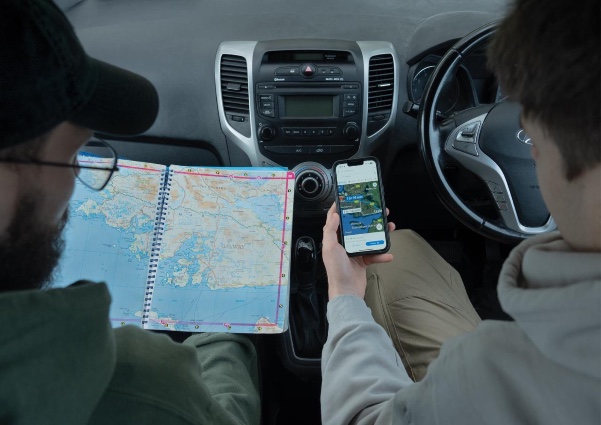
Leaning on an overused yet prudent metaphor, if your AI journey is a car, responsible AI is not the brake that slows down innovation. Rather, it is your steering wheel and your seatbelt. It helps you get to where you need to go, setting your direction and getting you to your destination, safely.
So how do you do it in practice?
A Practical Framework for Doing AI Responsibly
Because of the broadness and complexities of AI, it is useful to break responsible AI down into 5 pillars:
- Ethics: setting boundaries and ensuring AI embodies the moral values of your organisation. Ethical AI approaches ensure that guardrails are designed from the get-go to facilitate AI adoption at scale.
- Human-Centred: curating cultural change, and reducing adoption resistance by taking a people-focused approach to design and deployment. This enables workforce and customer buy-in for a more sustainable and long-term production rollout.
- Trust: ensuring your AI is not biased, hallucination risks are mitigated, and where decisions are transparent and explainable to all (not just techies). Trustworthy AI builds confidence with customers, employees, investors and regulators.
- Governance: embedding the operational processes needed to maintain accountable, auditable, and repeatable AI systems.
- Integrity: plugging security gaps and ensuring a sovereign-by-design deployment designed to create production-level ready workloads that align to compliance requirements.
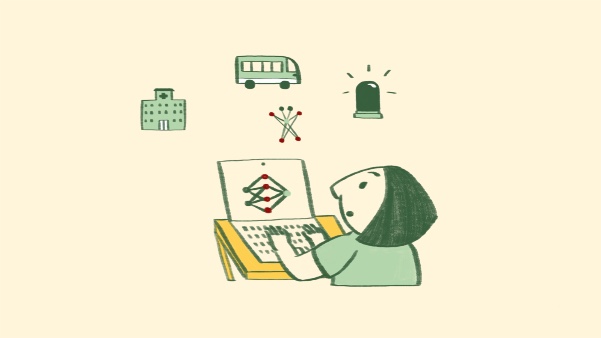
Now I'll be honest, creating a culture of responsible AI and putting into place the operational processes needed to govern and oversee all 5 pillars is not an easy feat (if it was everyone would do it, and we would not have this pilot-to-production chasm). Nevertheless, the hard work is worth it. Starting small, and strategically assessing your overall responsible AI maturity is a perfect stepping stone to developing a holistic, long-term, and prioritised responsible AI centre of excellence, which will produce dividends in the years to come (both socially and economically). Alternatively, start with one low-risk high-yield project that forces you to ask the difficult questions, bring in an expert, and get your hands dirty by figuring out how to scale responsibly through practice and experience.
Organisations that are treating responsible AI as the catalyst that it is – not a tick-box exercise – are the ones that are closing the pilot-to-production gap. Those who are not looking at responsible AI seriously from the get-go, are the ones that will remain stuck with endlessly circling POCs that add little value to their business, burning budget, and degrading trust.
The Human Cost of Irresponsible AI
Beyond the commercial advantages of responsible AI (Oxford academics have evidenced that more responsible AI is better for business, as fairer, safer systems are more accurate, helping bolster better data-driven decisions), it is also prudent to call out the human impacts, and what the potential consequences are when organisations productionise irresponsible AI. AI development does not happen in a silo. Every decision, every output, and every consequence are fundamentally human, not machine. The horror stories that result have been well documented in the media. As a result, the Alan Turing Institute estimates that 72% of the public want more safeguards and regulations around AI, and the UK Government's own research suggests that 25% of people feel AI will have an overwhelmingly negative impact on society.
The Only Question That Matters
Organisations leading the way in AI innovation, and all of us inside them, have an active duty to ensure that the AI applications we build are not only efficient, but also trustworthy, safe, transparent, sustainable and fair. Build AI systems everyone can trust – and prove it – then people become accelerators, not obstacles, to development. We ought to go above and beyond mere legal requirements, and ensure that AI POCs are designed to last, by putting people first. It is better for business, for society, and for the planet. It is the right thing to do.
The question is no longer 'can we build this with AI?'. Rather, 'can we trust AI with this?'.
The answer can be yes, but only if responsible AI principles are baked in from the start.